With the starter successfully made, now it's time for my first rye bread. I chose to make the Alpine baguettes from Local Breads as a first recipe because while the bread uses a rye starter, the bread itself is made using wheat flour, making the dough easier to handle.
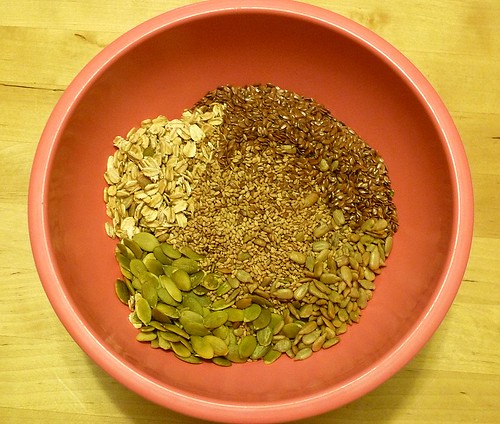
First, soak the grain and seeds the night before making the bread. This recipes calls for oats, pumpkin seeds, sunflower seeds, flax seeds, and sesame seeds.
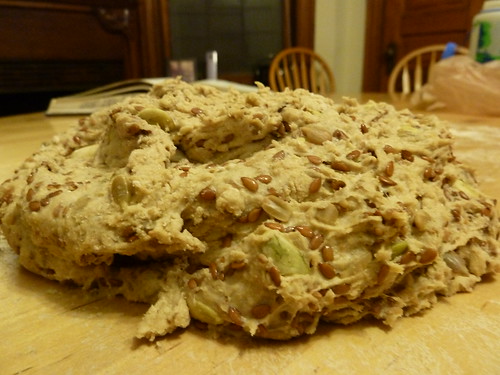
Next time, mix together the seeds and the flour mixture. This is when dough whisk comes in handy (thanks Joedy!).
As you can see, the dough is quite sticky.
Unfortunately I got distracted while measuring flour and forgot how much I added, so I tried to play by ear. I had to add A LOT of flour to prevent the dough from gluing onto my hands. My guess was that I miscounted by 1 cup. Even after adding +1 cup of flour, this is still a fairly sticky dough to work with. Finally, I realized that the trick is to use a pair of very well-oiled hands to knead the dough.
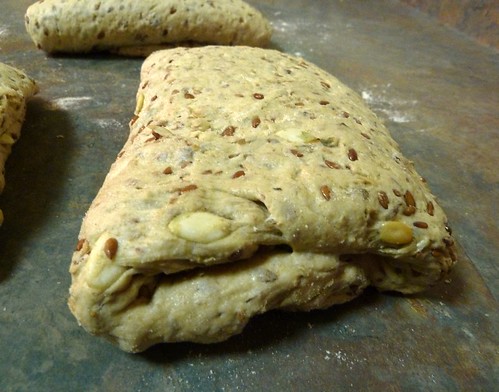
After the first rising, the dough divided into 3 pieces and each piece fold into thirds:
The dough is then rested for about an hour until it it puff up, and shaped into baguette form. It then goes into the oven for about 25 minutes. I didn't have parchment paper, so the baguette dough got somewhat misshaped when I lifted it from the counter to the baking stone.
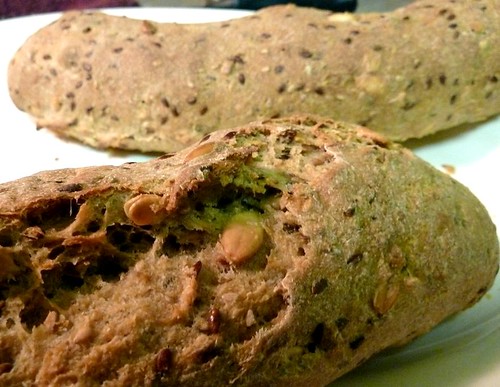
Whole wheat grains taste better after it's been cooled down. However, I couldn't wait that long as I was hungry. When cut immediately after coming out of the oven, the inside look almost gummy:
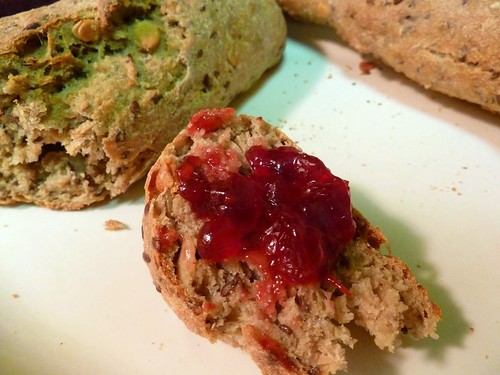
It taste really good with lingonberry preserve:
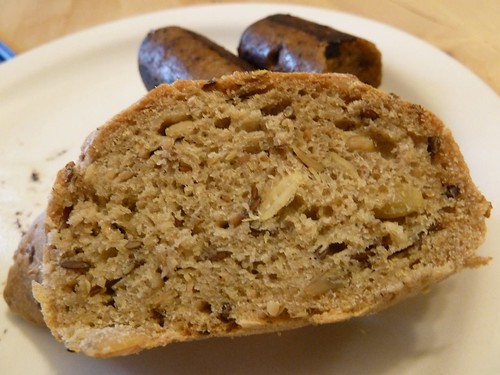
As you can see, the appearance improved next day. It looks much more bread-like.
(Those are Italian veggie sausage in the background. I have to admit they are actually pretty good and the spiciness goes well with rye breads).
For a first attempt, I was happy with the way this bread turned out. It was the first time in years I had bread that somewhat resembled the bread I ate in Germany. The aroma of the bread is slightly tangy without being sour at all. The pumpkin seeds give it a nutty, earthen scent. The rye starter gave it a unique flavor that taste worlds apart from the rye one get at the supermarkets here. Despite forgetting how many cups of flours I put in and trying to eye it from there, the bread took a life of its own and was well-received by the people I shoved it to. So if people tell you that rye sourdough or German breads are hard to make, or if things don't look perfect, don't fret, just go make it. It may actually turn out fine!
I've recently got interested in bread baking. I saw the Bread Bible: 300 favorite recipes by Beth Hensperger, and decided to take a stab at the recipes. What I liked when I browsed the book was that the recipe seemed good, well thoughout, and no nonense recipes that didn't require every newest gadget at William Sonoma. Every recipe had hand mix instructions, and these are the recipes I could see people eating 20 years from now.
The recipe that caught my eye was the Italian whole wheat raisin walnut bread. Ever since my stay in Germany, I found that I have become drawn to the nuttiness of whole wheat and multi-grain breads. When made properly, they have a delightful chewiness and sweet, concentrated flavor that sets it apart from white breads. And when properly made, they are not heavy.
The process for this bread was straight forward. Luckily for me, someone at Food.com have uploaded the entire recipe and saved me the effort from retyping. The recipe calls for poofing the yeast, kneading and giving the dough two rises. Because I decided to start this recipe at 11pm at night, I decided to not wait until 5 am to finish the kneading in one setting. Instead, after the first raise I put the dough in the back porch, which I rated at about 20F at night, and will continue the second stage when I return from work the next day. The second day after I kneaded the dough I decided once again to sleep first and wait until third day to bake the bread. I crossed my fingers and hoped the bread turned out ok and not into a pungent fermented sourdough.
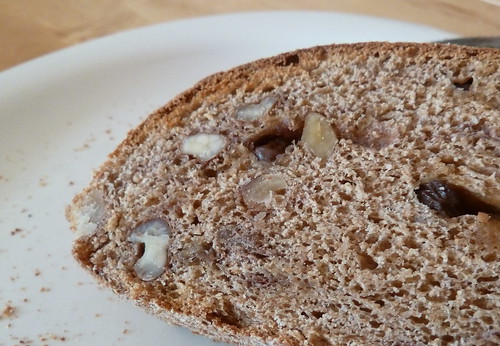
I finally got around to baking the third day. Mostly because it was the infamous blizzard and I didn't have anywhere else to go. Given that I had let the dough sit for two days without adjusting the yeast called for in the original recipe, I was expecting something that tasted like breaded sourkraut. Here is the picture of the bread, sliced:

I was pleasantly surprised when I saw how beautifully the bread looked when it came out. The bread had a beautiful, even crust. The interior was moist and dense. It was obvious that the bread was slightly overly fermented as the bread had a sour tang and the air pockets reminds me of the yogurt bread. However, it was still one of the bread I ever tasted. The balance between the sweet raisins and crunchy walnut set in whole wheat bread was just perfect. I circumvented the sour problem by topping the bread with honey. The only other issue that I noted, besides the slight over-fermentation, was that I had to add a lot of flour (+ 1/2-1 cup) during kneading to prevent the dough from sticking too much. This threw off the sugar and salt balance slightly, and the bread did feel like it needed a bit more salt and sugar. Next time I may add a little less water to start with, and tried to follow the time instructed!
Cold soba noodles is one of the greatest snacks (yes, I am going to call this a snack). Simply boil in, add some dipping sauce, and sprinkle with some toasted sesame seeds, and you're done! Ten minute lunch.
Most Asian supermarkets will sell the dipping sauce. However, they will all contain fish as the base. To make your own,
Just hungry has an excellent post on how to make your own sauce. The vegetarian dashi can be made by soaking kombu and shiitake mushroom.
If you like me, however, you will find that the vegetarian versions, while good, don't always have the savory depth of the fish version. Not to mention I like things spicy. So...I decided to play around with the taste a little more. I combine the stock with some vegetarian oyster sauce made from shiitake mushrooms, and add red chili oil (with crushed red chilis) and sesame oil. I am afraid that my version is not very Japanese, but it sure is tasty to me.
What are some of your favorite ways to eat soba?
This is a soup made with chana dal I made for my Hyde Park dinner party. The cooking is pretty similar to the standard way to cook dal. First I boiled the chana dal with crushed ginger and tumeric, and add chopped tomatoes and salt when the legumes are almost done cooking. For the toppings, I brown the onions, and then add cumin seeds, dried red chili peppers, sliced garlic, and cumin powder. Right when dal get cooked through I add the toppings to the dal and mixed everything together and garnish with cilantro.
The soup was a hit.




 Posts
Posts

